 Connector Subsea Solutions
 Part of the Subsea Distribution Alliance


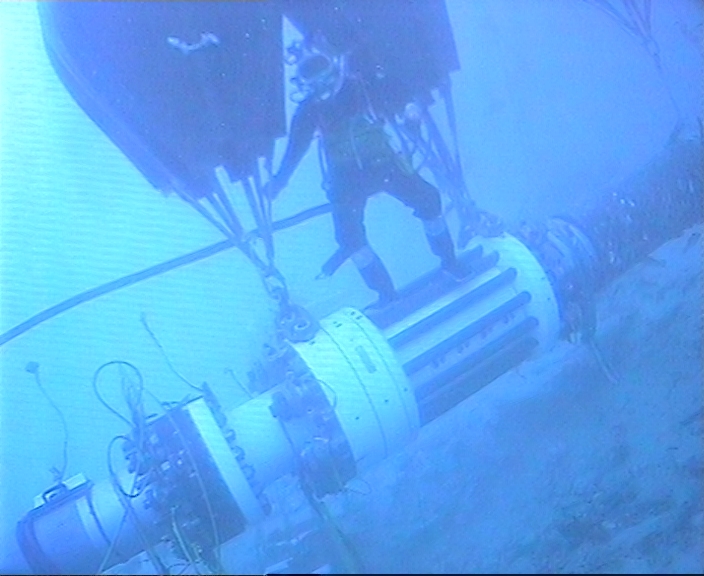
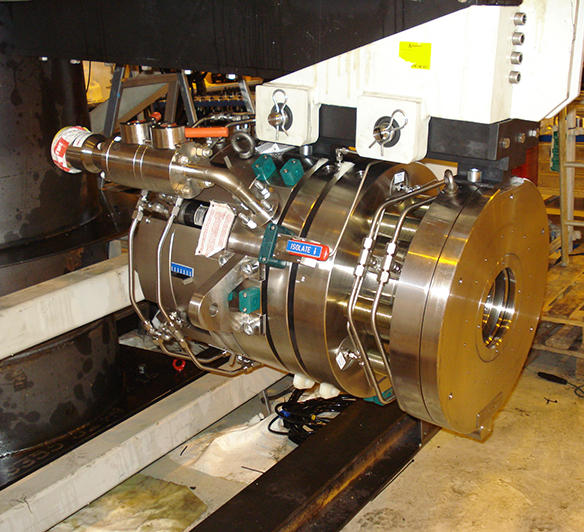
01 // CSS MORGRIP® PiP Clamp
IN MANY DEEPWATER FIELDS, PIPE-IN-PIPE (PIP) SYSTEMS CARRY THE HIGHEST PRODUCTION PRESSURES. A SUDDEN
LEAK ON THE INNER PIPE CAN HALT OPERATIONS AND COST MILLIONS EACH DAY. WHEN OUR CLIENT’S 10″ NOMINAL
INNER PIPE NEEDED A CONTINGENCY SOLUTION, CONNECTOR SUBSEA SOLUTIONS (CSS) STEPPED IN TO DESIGN A
DIVERLESS CLAMP THAT COULD BE HELD IN CONTINGENCY, READY FOR IMMEDIATE DEPLOYMENT AS REQUIRED.
Project Background
When an international operator in West Africa requested
an Emergency Pipeline Repair System (EPRS) clamp for their
10″ PiP production line, CSS engineered a bespoke design
tailored to PiP-specific repair scenarios, accommodating
varying nominal pipe sizes whilst remaining simple enough
to enable fully diverless installation.
The PiP clamp supplied was engineered to seal a leak on
the inner pipe, including at a field joint location where the
minimum available clearance occurs. It seats securely on the
inner pipe within the minimal annular clearance of a standard
field joint, ensuring sufficient clearance to the outer pipe
even when accounting for nominal OD variations.
Key Challenges
- PiP Geometry: The two concentric pipes left very little clearance at the field joint. The clamp therefore needed to avoid contact with the outer pipe yet still seal fully on the inner pipe.
- Inner-Pipe Variations: Two nominal OD variants necessitated a seal that could accommodate a range of diameters without compromising performance.
- Deepwater, Diverless Requirement: The project’s deepwater environment necessitated deployment and activation entirely by ROV.
- High Operating Pressure: At 317 barg, any leak could rapidly escalate. The clamp therefore needed to be rated well above this pressure to provide operator confidence.
Engineering Solutions
During a front-end engineering design (FEED) study, CSS
evaluated several PiP repair concepts to address different
potential failure modes, covering inner and outer pipe failures
at field joints and along the main pipeline. Ultimately, the client
opted for a streamlined clamp focused entirely on the inner pipe
to provide contingency for the most likely failure scenarios.
Key features include:
- Slim Profile Body: Compact external dimensions allow
the clamp to slide into the narrow annular gap without
contacting the outer pipe. Small buoyancy elements were
added to ensure the clamp remains correctly oriented once
activated, allowing the crane to disengage smoothly. - Adjustable Landing Saddles: Saddles can be fine-tuned to
accommodate landing installation tooling on the inner or
outer pipe, ensuring a precise fit at the field joint or another
specified location. - Diverless ROV Guide Tooling: Instead of gripping the pipe
directly, the installation tooling was designed to gently
guide the clamp along the field-joint ribs. Once in position,
hydraulic lines would close the clamp around the inner
pipe. After activation, the lines would be cut, allowing the
tooling to float to be recovered. - Material Selection: The clamp body was forged from F60,
selected for its superior strength and corrosion resistance
in deepwater environments.

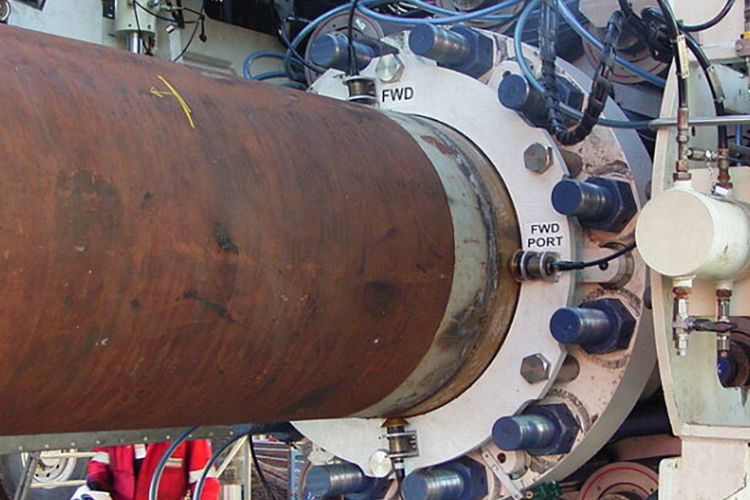
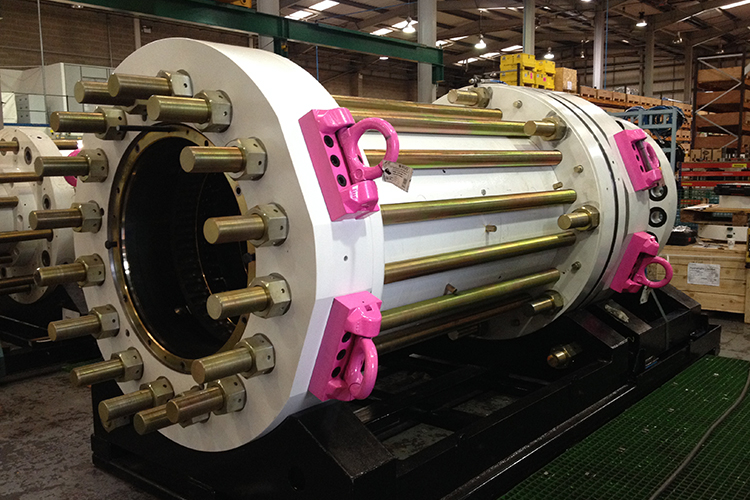
02 // CSS MORGRIP® PiP Clamp undergoing hydrotest during FAT

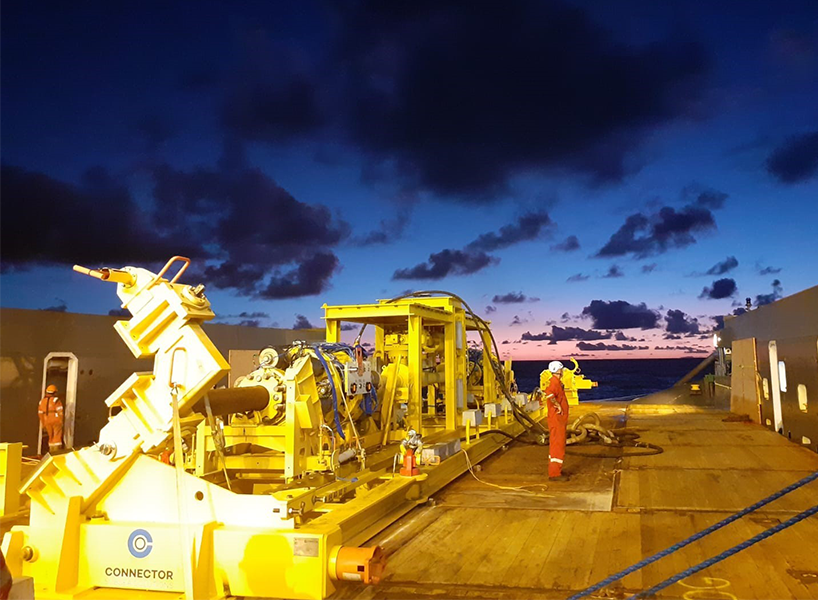
03 // CSS MORGRIP® PiP Clamp including installation tooling

04 // CSS MORGRIP® PiP Clamp including installation tooling

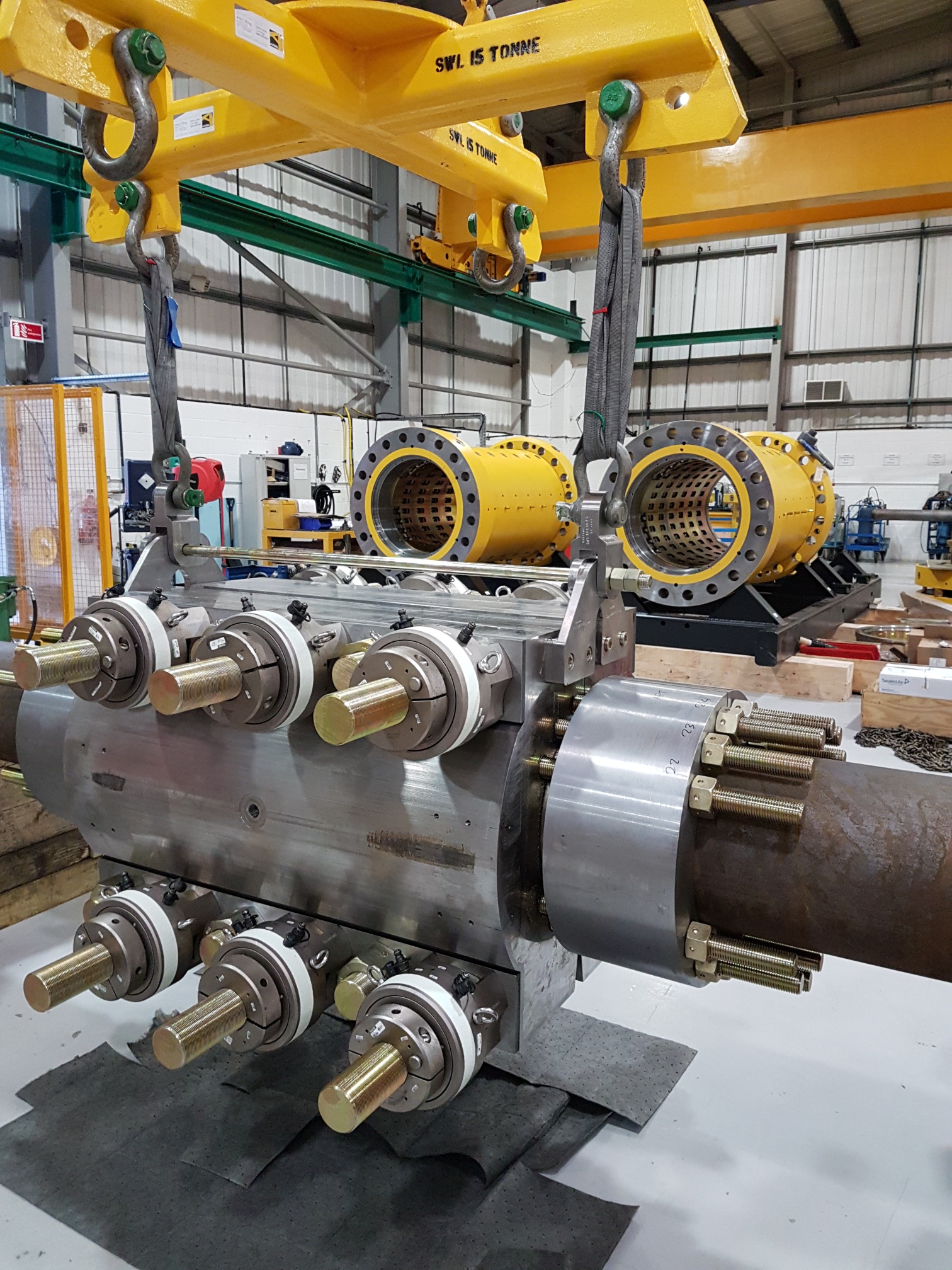
05 // CSS MORGRIP® PiP Clamp with bolt deployment basket
Delivery & Contingency Stock
Once fabrication and testing were complete, the clamps were
shipped to the client. They now form part of the EPRS inventory,
ready for immediate deployment should a pipe leak occur.
Conclusion & Customer Feedback
By engineering a specialised PiP clamp, CSS delivered an optimised and cost effective contingency solution for the client’s high criticality pipeline. Its simplicity reduces manufacturing and maintenance costs, while the diverless installation tooling ensures reliable deepwater deployment. In practice, this lowers operational risk and gives the operator confidence that, should a leak occur, a proven clamp is ready for immediate use anywhere along the PiP system.